Introduction: What Is the Spotlight of Singapore?
The Spotlight of Singapore refers to the features, achievements, and experiences that have made the island nation widely recognized around the world. Singapore stands out for its combination of modern architecture, multicultural heritage, economic influence, environmental planning, and high-quality urban development.
For visitors, Singapore is often associated with famous sights such as Marina Bay Sands, Gardens by the Bay, the Merlion, and Changi Airport. For businesses and residents, the country is known for its role as a financial hub, technology centre, aviation gateway, and regional meeting point in Southeast Asia.
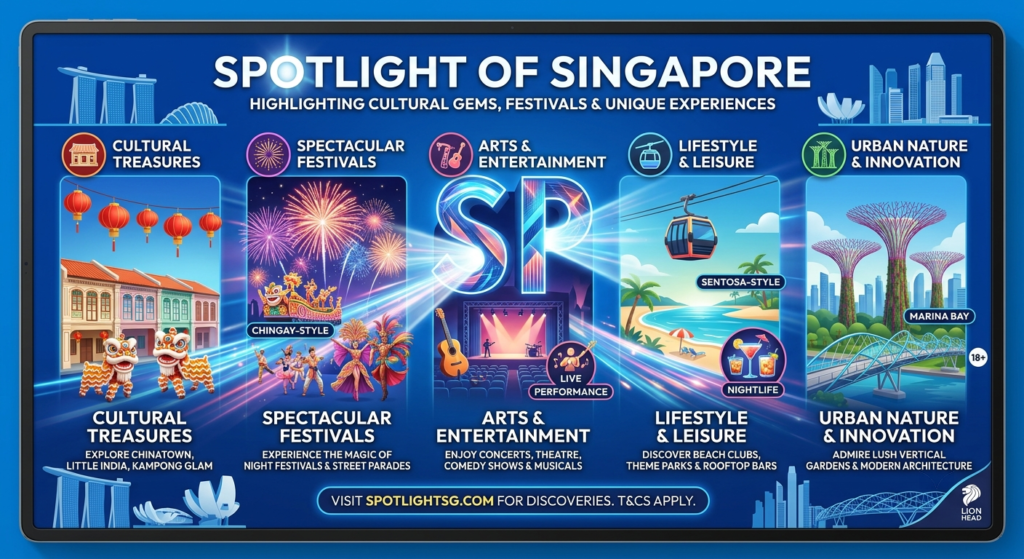
The appeal of Singapore comes from its ability to blend different identities. Traditional neighbourhoods such as Chinatown, Little India, and Kampong Glam exist alongside futuristic districts, while heartlands with HDB communities sit close to major commercial areas like Marina Bay and Orchard.
Iconic Landmarks & Views: The Places That Put Singapore on the Map
Singapore’s most famous landmarks represent the country’s mix of creativity, engineering, and cultural identity. These locations are among the first places many visitors explore when experiencing the Spotlight of Singapore.
Marina Bay and the Modern Skyline
Marina Bay is one of Singapore’s most recognizable areas, combining waterfront views, entertainment, business, and architecture. The district showcases the city’s modern image through landmarks including:
- Marina Bay Sands — a major integrated resort known for its distinctive three-tower design and rooftop observation areas.
- Merlion Park — home to the Merlion statue, a national symbol representing Singapore’s maritime history and identity.
- Esplanade – Theatres on the Bay — a performing arts venue recognized for its unique “durian” exterior design.
The Marina Bay area reflects Singapore’s transformation from a trading port into a globally connected city.
Gardens by the Bay and the Garden City Vision
Gardens by the Bay represents Singapore’s ambition to combine urban living with nature. The attraction features the Supertree Grove, conservatories, and landscaped spaces that highlight biodiversity and sustainable design.
Singapore’s “Garden City” identity has evolved into a broader focus on creating a liveable city where greenery is integrated into buildings, neighbourhoods, and public spaces.
Changi Airport: A Global Gateway
Singapore Changi Airport is frequently recognized internationally for passenger experience, design, and facilities. Beyond transportation, attractions such as Jewel Changi Airport have made it a destination in its own right.
The airport’s role reflects Singapore’s position as a major aviation hub connecting Asia and the world.
Cultural Spotlight: Diversity, Heritage & Shared Traditions
Singapore’s cultural identity is shaped by its multicultural population and long history as a trading centre. Chinese, Malay, Indian, Eurasian, and other communities contribute to the country’s diverse traditions, languages, festivals, and cuisine.
A Multicultural Society
One of the defining features of Singapore is the interaction between different communities. Visitors can experience this diversity across historic districts such as:
- Chinatown — known for Chinese heritage sites, temples, and traditional shops.
- Little India — recognised for Indian culture, food, festivals, and colourful streets.
- Kampong Glam — a historic Malay and Arab heritage area centred around cultural landmarks and lifestyle spaces.
Festivals such as Chinese New Year, Hari Raya Aidilfitri, Deepavali, and other cultural celebrations contribute to Singapore’s shared social landscape.
Hawker Culture: Food as a National Connection
Singapore’s food culture is one of its strongest international identities. Hawker centres bring together affordable meals, traditional recipes, and everyday social interaction.
Singapore’s hawker culture was inscribed on the UNESCO Representative List of the Intangible Cultural Heritage of Humanity in 2020. This recognition highlights the importance of hawker centres as community spaces, not only places to eat.
Popular local dishes include:
- Hainanese chicken rice
- Laksa
- Char kway teow
- Satay
- Nasi lemak
- Chilli crab
Food remains one of the easiest ways to understand Singapore’s multicultural character.
Global & Economic Spotlight: Singapore’s International Role
Singapore has gained global attention because of its strong position in business, finance, logistics, and innovation. Its strategic location in Southeast Asia has helped it become an important connection point between global markets.
Financial and Business Hub
Singapore is recognised as one of Asia’s leading financial centres. The city hosts regional offices of many international companies and serves as a base for businesses operating across Southeast Asia.
Key strengths include:
- Strong infrastructure
- Stable business environment
- International connectivity
- Skilled workforce
- Advanced digital systems
At the same time, Singapore faces challenges common to successful global cities, including high living costs, limited land resources, and the need to maintain affordability and inclusiveness.
Aviation, Trade and Connectivity
Singapore’s economy has long been connected to global trade. Its port, airport, and logistics networks support international commerce and strengthen its role as a regional gateway.
The country’s location along major shipping routes has historically contributed to its development as a trading centre.
Sustainability & Innovation Spotlight: Building a Future-Ready City
Singapore’s modern identity increasingly includes sustainability, technology, and urban innovation. The country has invested in environmental planning while managing the challenges of being a densely populated city.
A Green City Approach
Singapore’s sustainability efforts include:
- Expanding parks and green corridors
- Developing energy-efficient buildings
- Encouraging public transport use
- Protecting natural areas such as Bukit Timah Nature Reserve
Places such as Gardens by the Bay demonstrate how Singapore combines tourism, conservation, and urban design.
Smart Nation Development
Singapore’s Smart Nation initiatives focus on using technology to improve daily life. Digital government services, cashless payments, smart transport solutions, and innovation districts are examples of how technology is integrated into society.
However, digital development also requires attention to issues such as privacy, accessibility, and ensuring that different groups can benefit from new systems.
Everyday Highlights: What Makes Daily Life Stand Out
The Spotlight of Singapore is not only found in famous attractions. Many of the country’s memorable experiences come from ordinary daily routines.
Efficient Urban Living
Singapore’s MRT system, public housing, shopping centres, and public spaces shape everyday life. Many residents experience a convenient lifestyle where workplaces, schools, food options, and recreational areas are connected.
Common local experiences include:
- Morning exercise at parks
- Weekend meals at hawker centres
- Shopping at neighbourhood malls
- Evening walks along waterfront areas
- Community activities in heartland districts
A Balance of Modern and Traditional
Singapore’s appeal comes from contrasts. Visitors can explore futuristic architecture in Marina Bay, then visit heritage streets nearby. Residents can enjoy international dining while maintaining connections to traditional food, festivals, and neighbourhood communities.
This combination of progress and heritage is a major reason Singapore continues to attract attention globally.
Frequently Asked Questions
What is the Spotlight of Singapore?
The Spotlight of Singapore refers to the landmarks, culture, achievements, and experiences that represent Singapore’s identity. It includes attractions, heritage, innovation, sustainability, and its international role.
What are the most famous landmarks in Singapore?
Some of Singapore’s most famous landmarks include Marina Bay Sands, Gardens by the Bay, the Merlion, Esplanade, and Changi Airport. These locations represent the country’s architecture, tourism, and global image.
Why is Singapore famous worldwide?
Singapore is known globally for its economic role, modern infrastructure, multicultural society, food culture, cleanliness, safety, and position as a regional hub for business and travel.
What makes Singapore’s culture unique?
Singapore’s culture is shaped by multiple ethnic communities living together. Its food traditions, festivals, languages, and heritage districts reflect this diversity.
What are the must-see places in Singapore?
Popular places include:
- Marina Bay
- Gardens by the Bay
- Sentosa
- Chinatown
- Little India
- Kampong Glam
- Orchard Road
- Changi Airport
The best choices depend on whether visitors prefer nature, shopping, history, food, or entertainment.
How has Singapore gained global recognition?
Singapore has gained recognition through economic development, international connectivity, sustainability projects, tourism attractions, and innovation initiatives.
Is Singapore only about modern buildings and technology?
No. While Singapore is known for modern development, its identity also comes from heritage neighbourhoods, local communities, traditional food, cultural celebrations, and natural spaces.
Conclusion: What Makes Singapore Stand Out
The Spotlight of Singapore comes from the country’s ability to combine different strengths into one experience. Its iconic landmarks, multicultural heritage, economic achievements, and sustainability efforts have created a distinctive global identity.
Singapore’s story is not only about skyscrapers and technology. It is also about hawker centres, neighbourhood communities, cultural traditions, green spaces, and the everyday experiences of people who live there.
For travellers, Singapore offers a compact destination filled with diverse experiences. For residents, it represents an ongoing effort to balance growth, heritage, innovation, and quality of life.